
MINDS CDT, 2020
MINDS alumnus | Research Fellow, Nanyang Technological University | Visiting Fellow, University of Southampton
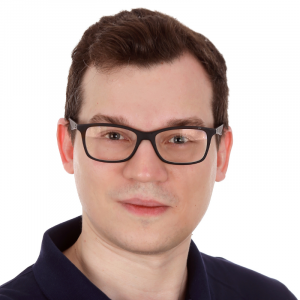
Understanding how AI agents develop temporally grounded languages
Research focus: Multi-agent systems, emergent communication and interpretable AI
Olaf Lipinski is a MINDS alumnus whose doctoral research investigated how autonomous AI agents develop communication systems from scratch, with a particular focus on how they refer to events across time. He is now a Research Fellow at Nanyang Technological University and remains a Visiting Fellow at the University of Southampton.
Career at a glance
| MINDS status | Alumnus |
| MINDS metadata | MINDS CDT, 2020 |
| Doctoral research | Emergent communication between autonomous AI agents |
| Research focus | How agent-developed communication refers to events across time |
| Current role | Research Fellow |
| Current organisation | Institute for Digital Molecular Analytics and Science, Nanyang Technological University, Singapore |
| Continuing Southampton link | Visiting Fellow, University of Southampton |
| Previous role | Senior Machine Learning Scientist, Visa (August 2025 to August 2026) |
How AI agents learn to talk about time
An autonomous agent is an AI system that takes in information about its surroundings and chooses actions within an environment. When several agents need to work together, they can be given the chance to send signals to one another. Over many rounds of trial and error, they can settle on their own shared set of symbols. Nobody writes these communication systems in advance. They emerge as the agents learn to cooperate, which is why researchers call this emergent communication.
This raises some important questions. What do the agents’ signals mean? How do those meanings become established? Can people interpret the result? And how do agents communicate about things that happen at different points in time?
During his MINDS PhD, Olaf investigated how autonomous agents develop languages from scratch, with a particular focus on time. He studied how agents learn to refer to events across time, how they represent sequences of events, and how time shapes the communication protocols they develop. He also developed methods for analysing the protocols the agents produce, and explored architectures that help agents form temporal representations of their data.
The communication systems studied in this field are much simpler than human language. Olaf’s work examines whether and how they develop useful properties, such as the ability to refer back to something seen earlier.
Why the research matters
Understanding how agents coordinate
Emergent communication research contributes to understanding how groups of autonomous systems exchange information and coordinate their actions.
Making agent communication interpretable
Methods for analysing the protocols agents create could help people examine what those signals mean, rather than treating them as a black box.
Supporting oversight of multi-agent systems
More interpretable communication may support the people who build and oversee systems made up of multiple autonomous agents.
Temporal grounding and emergent communication
Temporal grounding means connecting a signal or representation with events that occur at different points in time. In Olaf’s research, pairs of agents played a communication game in which one agent describes an object to another. In a temporal version of this game, some objects reappear from earlier rounds, so the agents can benefit from referring to when something was seen as well as what it looks like. This allowed him to test whether the agents’ messages developed temporal references, and to study how the design of the agents’ neural network architectures affected this.
He combined this with interpretability methods, designed to identify what individual messages refer to, so that the communication protocols agents develop can be examined in human-understandable terms.
Selected research outputs
- Journal article (2026): It’s About Time: Temporal References in Emergent Communication. Olaf Lipinski, Adam J. Sobey, Federico Cerutti and Timothy J. Norman. Journal of Artificial Intelligence Research, volume 86. An earlier version was released as an arXiv preprint in 2023 under the title “On Temporal References in Emergent Communication”.
- Conference paper (NeurIPS 2024): Speaking Your Language: Spatial Relationships in Interpretable Emergent Communication. Olaf Lipinski, Adam J. Sobey, Federico Cerutti and Timothy J. Norman. Thirty-Eighth Conference on Neural Information Processing Systems.
- Workshop paper (EmeCom Workshop at ICLR 2022): Emergent Password Signalling in the Game of Werewolf. Olaf Lipinski, Adam Sobey, Federico Cerutti and Timothy Norman.
- PhD thesis (2025): Temporal Dynamics in Emergent Communication. University of Southampton.
Olaf’s wider publication record is available on Google Scholar and ORCID. Code from his research is available on GitHub.
MINDS doctoral project: Emergent Communication in Social Games
Public engagement: decoding an unfamiliar language
In November 2024, Olaf wrote for The Conversation, an independent publication that brings academic expertise to a general readership. His article used his doctoral research on emergent communication to explore a wider question: what it might take to interpret a language no human has encountered before. The piece is a work of research communication and does not suggest that alien languages exist or that they could be decoded.
External article: Read Olaf’s article in The Conversation
From emergent communication to applied machine learning
Olaf completed his PhD in Artificial Intelligence at the University of Southampton in 2025. He then held a research fellowship at the University, developing neural networks for maritime-engineering challenges with industry partners.
From August 2025 to August 2026, he was a Senior Machine Learning Scientist at Visa, where he worked on machine-learning approaches to detecting and preventing fraud.
He is now a Research Fellow at the Institute for Digital Molecular Analytics and Science, Nanyang Technological University, Singapore, working at the intersection of machine learning and molecular science. He remains a Visiting Fellow at the University of Southampton. Across these roles, the connecting thread is the development and application of machine-learning expertise in different domains.
Olaf’s MINDS experience
Related story
Connect with Olaf
Interested in emergent communication, multi-agent systems or interpretable AI? Explore Olaf’s current research, connect through LinkedIn or contact the MINDS team about a wider research or collaboration enquiry.