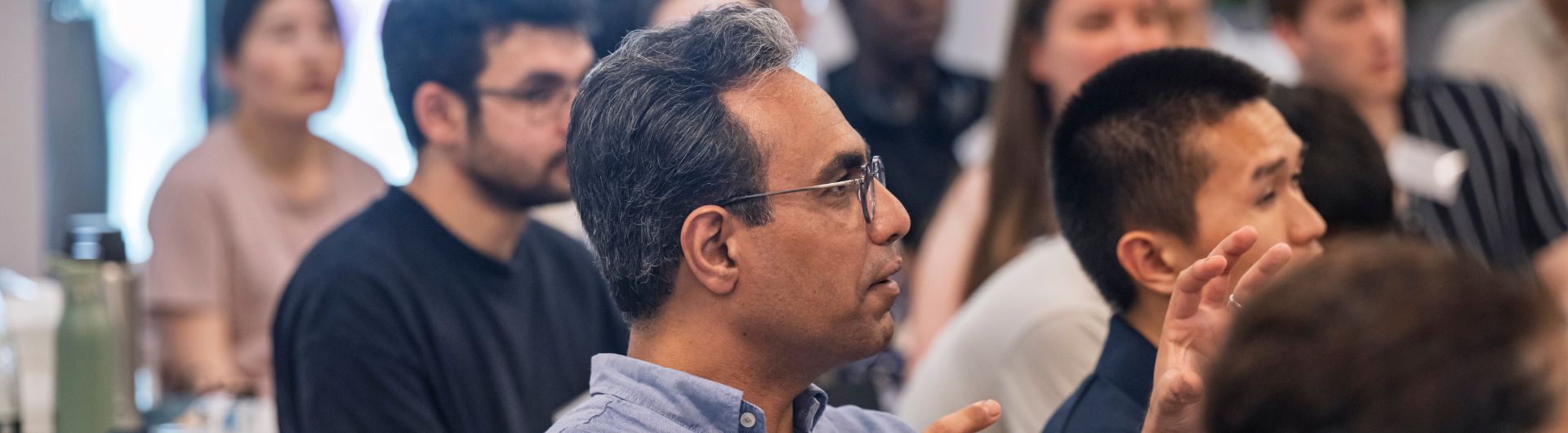
Can you train a deep reinforcement learning model on an ordinary desktop computer? Could a magnetic robot steer itself through blood vessels? How does one person stay in charge of a swarm of drones? MINDS postgraduate researchers put these questions to industry partners, policymakers and academics at the 2026 MINDS and SustAI Showcase.
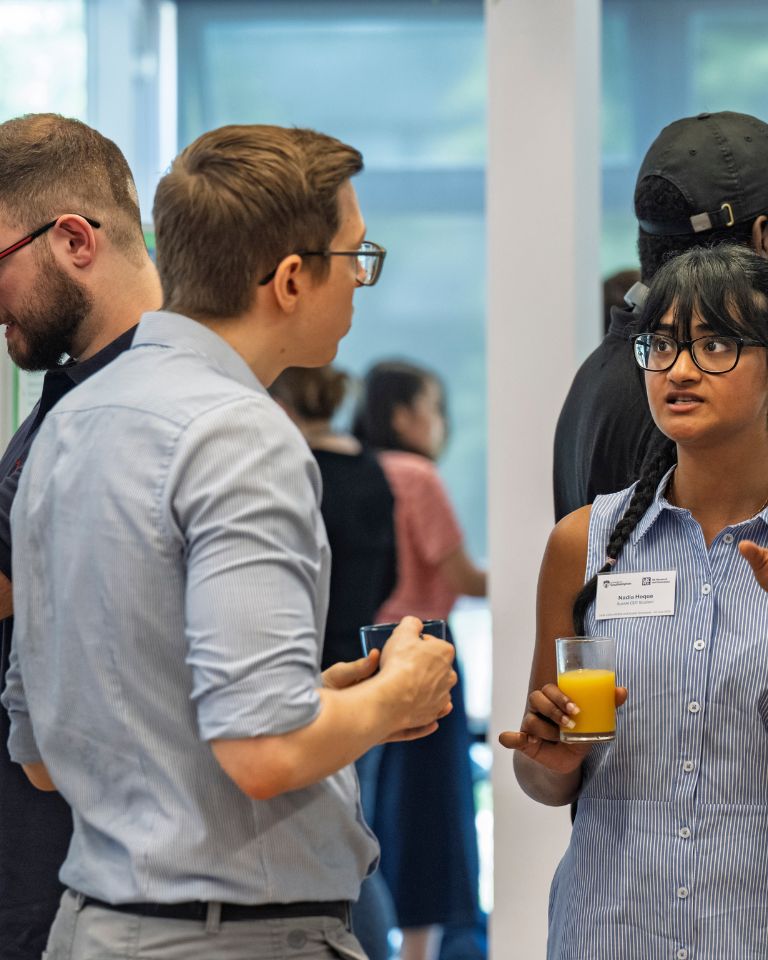
The Showcase took place on 24 June 2026 at Garden Court on the University of Southampton’s Highfield Campus. It brought postgraduate researchers from the MINDS and SustAI Centres for Doctoral Training together with the organisations that might one day work with them. A highlight film, produced by Impact Media Specialists, captures the day. It also features SustAI postgraduate researcher Nadia Hoque on being part of a multidisciplinary CDT community.
Why this work matters
Professor Stuart Middleton, MINDS Deputy Director, opens the film by setting out what MINDS and SustAI researchers bring to the UK’s AI capabilities, to responsible innovation, and to organisations looking to collaborate.
“Our students are good to go in a sense of awareness of the responsible use of AI and the effective use of AI.”
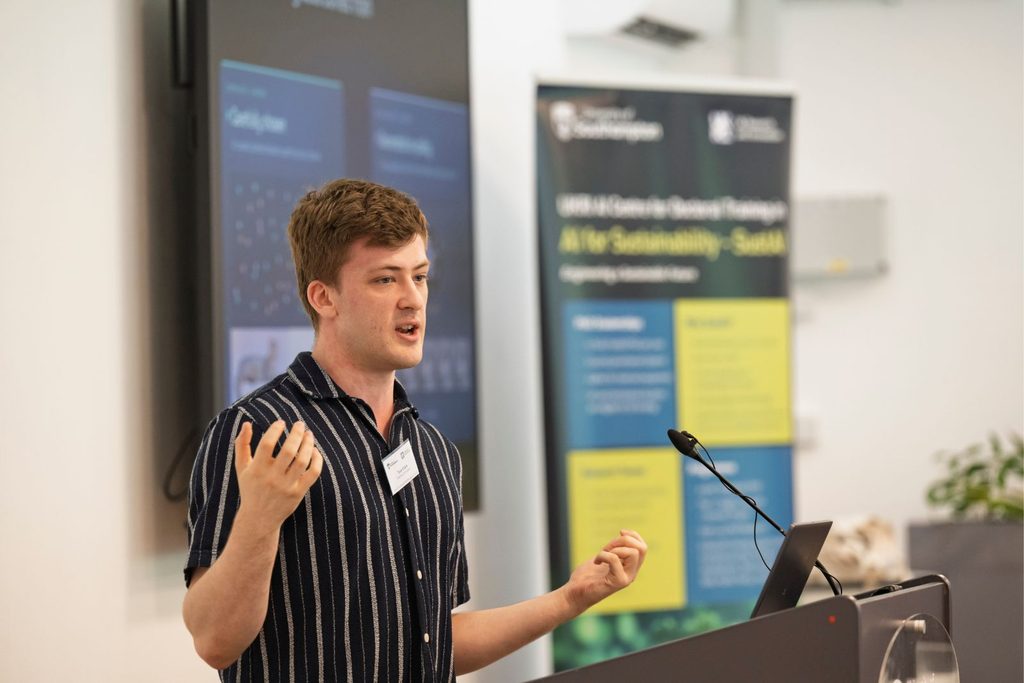
Deep reinforcement learning on a desktop PC
Tyler Clark works on deep reinforcement learning, a field of AI used for problems from drone flight and healthcare to training large language models. Training these models usually needs expensive, specialist computing. “What I’ve really focused on is trying to get the amount of time it takes to train these models way, way, way down,” he says.
Using the video game Super Mario Galaxy as a test case, Tyler is exploring whether useful reinforcement learning can run on a standard desktop. That would open the research to people without access to costly hardware. “It’s going to make research faster. It’s going to mean more people can use the technology.”
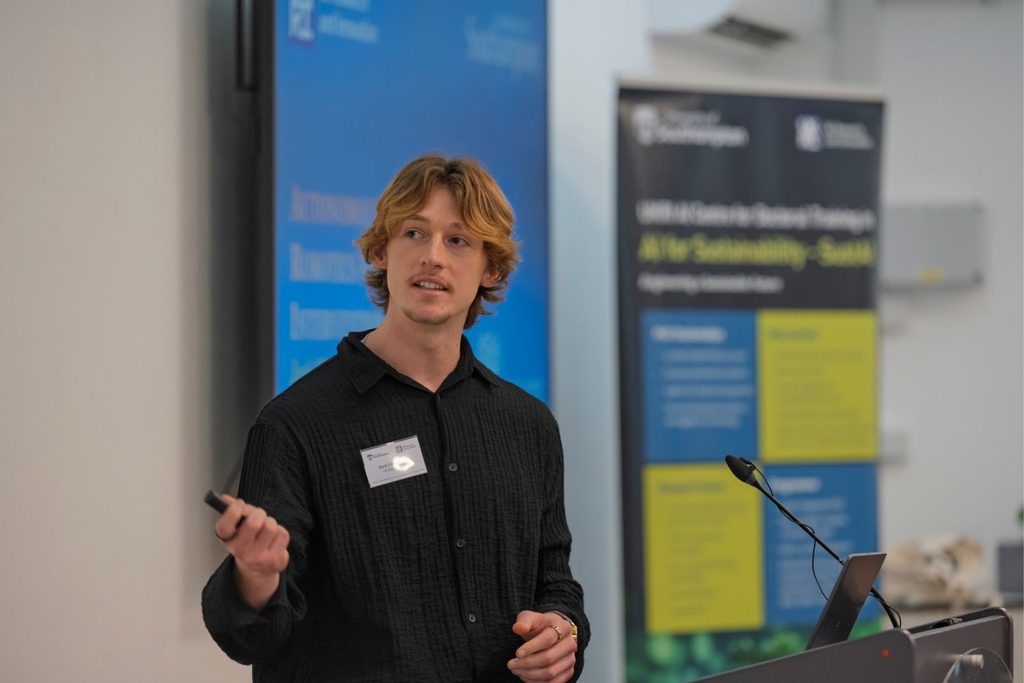
Magnetic robots for safer surgery
“I’m working on magnetic continuum robots to advance safety for healthcare in surgical robotics,” says Jack Hilton-Jones. His robots are designed to navigate blood vessels without mechanical pull-wires, for delicate endovascular procedures. Drawing on a statistical analysis of more than 1,600 controller events, he has built a hierarchical controller that learns when to trust its own predictions and when to pull back.
Jack came to robotics from mathematics, and his work brings together AI, control theory, robotics and healthcare. He sees robotics helping to deliver treatment in local centres, so patients can be treated more quickly. After his PhD, he hopes to work as a robotics engineer, with a particular interest in space robotics.
Keeping humans in charge of robot swarms
Operating a single drone can take one person, and often two or three. William Hunt is working to change that. “So my research is often looking at the ways that we can get one person to control a large number of drones in what we call a swarm,” he says.
Handing autonomy to robots raises ethical questions, so William’s focus is on keeping the human operator at the heart of every decision. Too much information from a swarm can overwhelm an operator, and too little erodes trust. He is developing new interfaces and control methods, including using large language models so operators can communicate with a swarm more naturally. His work won the Best Demo Award at AAMAS 2023.
Poster prize winners
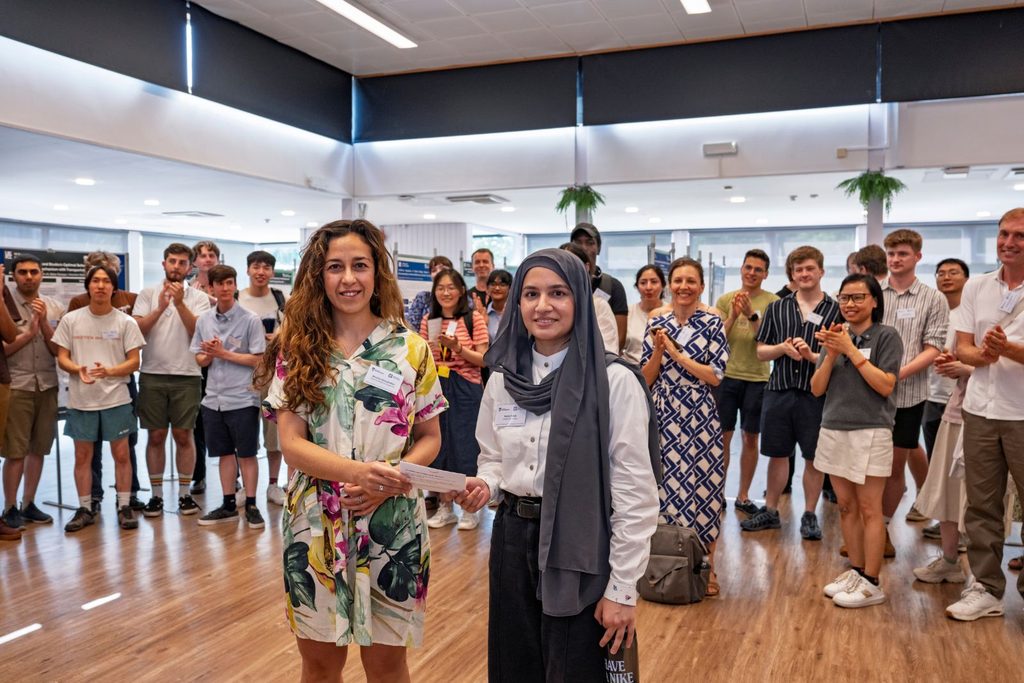
Nehal Yasin won the MINDS poster competition. Her research looks at shortcut learning, where machine learning models pick up the easiest patterns in data rather than the ones a person would rely on, such as recognising a bird by the blue sky behind it rather than the bird itself. Her aim is AI that is transparent about what it has learned and dependable enough to be trusted outside the lab.
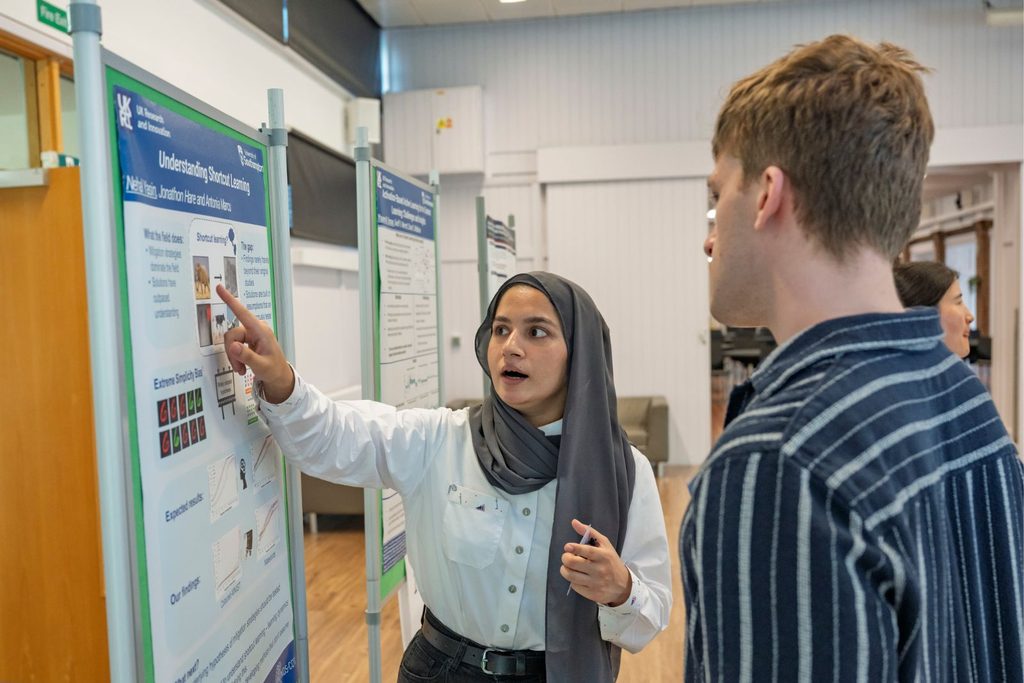
“I had quite a lot of engagement from the audience,” she says. She came away with new ideas to explore and more curiosity to push her research further.
“Winning the prize means a lot to me because it gave me confidence that the people I spoke to really cared about my research and found it interesting.”
Andrew Poile won the SustAI poster competition.
Where MINDS can lead
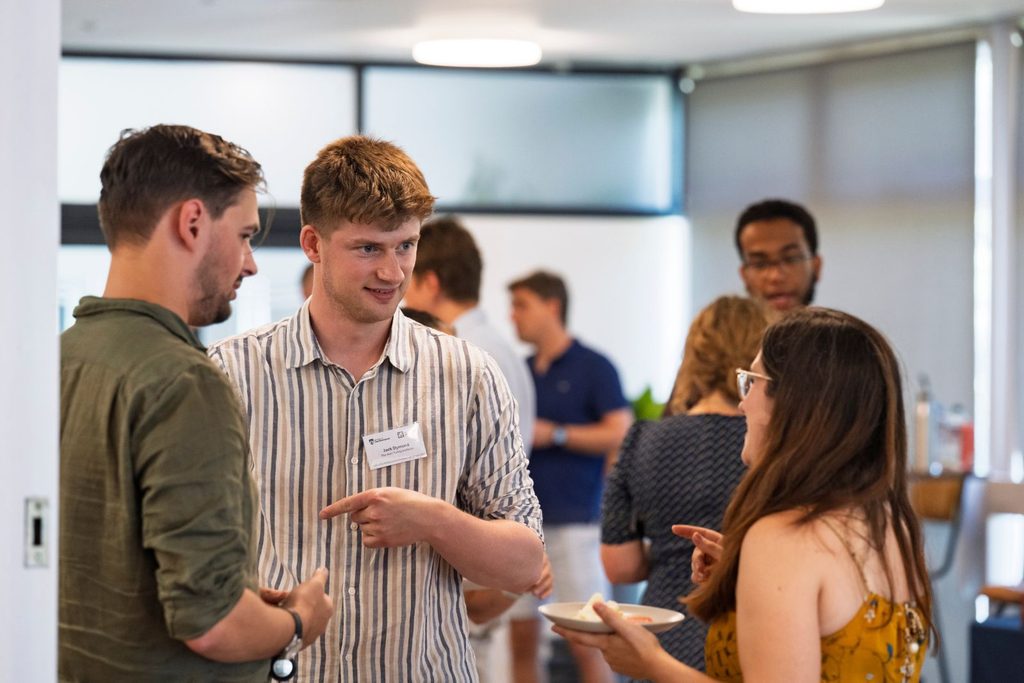
MINDS alumnus Jack Dymond was part of the programme’s first cohort and now works at The Alan Turing Institute’s Applied Research Centre for Defence and National Security. His PhD was sponsored by Dstl, which kept him in contact with the organisation throughout his research and opened the way to his current role. “I think without the CDT I might not have been exposed to that opportunity,” he says.
From academic research to industrial scale
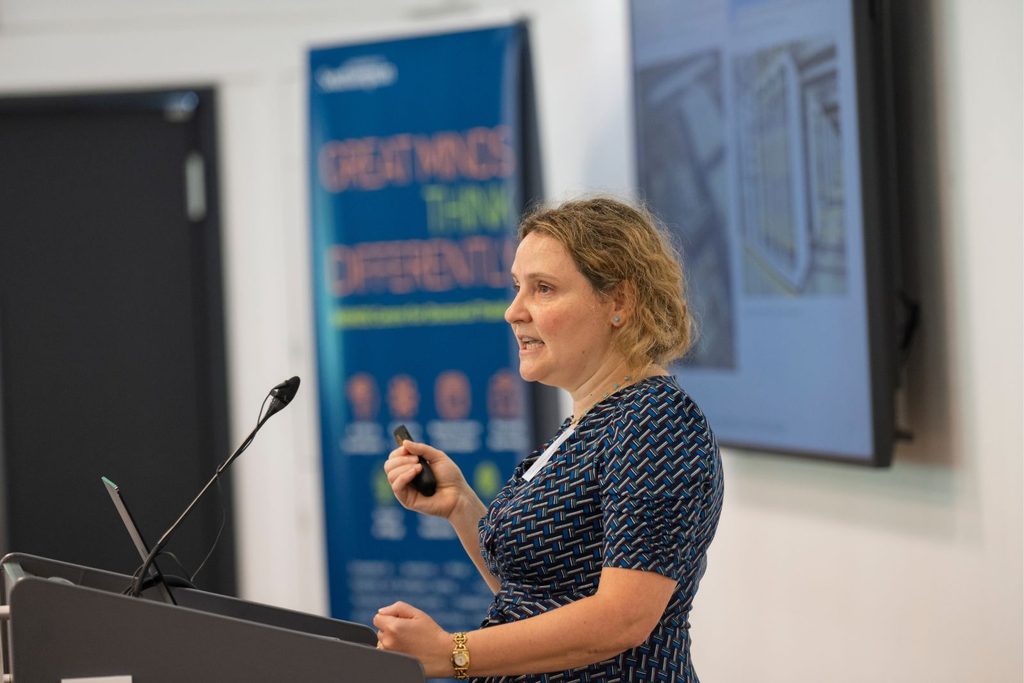
Francesca Parmigiani from Microsoft Research Cambridge delivered the opening keynote, “Research at Microsoft in the AI era”. A Southampton alumna who completed her PhD at the Optoelectronics Research Centre in 2006, Francesca now leads Microsoft’s Analog Optical Computing project. Her keynote traced the progression from fundamental academic research to large-scale industrial innovation, and how advances in optical research translate to the scale at which Microsoft now operates.
The programme also included a second keynote from Jack Lewis of Ada Mode, an editorial session with Daniel Jopling from IOP Publishing, and talks from MINDS alumnus Mark Towers and SustAI postgraduate researchers Nastja Vodopivec and Niall Vyas.