
MINDS CDT doctoral researcher | University of Southampton
MINDS CDT, 2020 · Expected graduation 2027
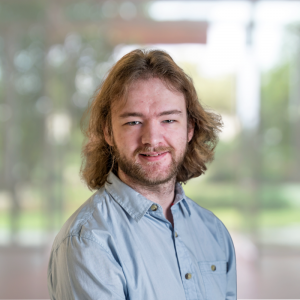
Modelling how the brain processes and maintains short-term memories
Xander Lowe is investigating how networks of neurons hold information over short periods, the basis of short-term memory. He combines laboratory recordings of the electrical activity of real neurons with computer simulations of the same mechanisms. The work has potential relevance to understanding neurological and developmental conditions, and could inspire more energy-efficient, brain-inspired computing.
Research at a glance
| Research focus | How neurons and neural networks maintain short-term memory |
| MINDS theme | Nanoelectronic Technologies for AI |
| Methods | Electrophysiology (laboratory recording of neuronal activity) and in-silico neural simulation |
| Key concepts | Neuronal excitability, ion channels, NMDA receptors, GABAergic inhibition, persistent activity |
| Potential relevance | Research into neurological and developmental conditions; brain-inspired and neuromorphic computing |
| Current status | Doctoral researcher, expected to graduate in 2027 |
How does the brain hold on to information?
The brain processes, stores and manipulates information using networks of electrically active neurons. Short-term memory, such as keeping a phone number in mind for a few seconds, depends on these networks sustaining activity after the original signal has gone. How biological neurons achieve this is still not fully understood.
Xander’s research investigates the mechanisms involved. He studies how the electrical behaviour of individual neurons, and the way they excite or inhibit one another, may allow a network to keep information active over short periods.
Why the research matters
Understanding brain conditions
Changes in how excitable neurons are, and in the balance between excitation and inhibition, have been associated with several neurological and developmental conditions, including schizophrenia. By investigating these mechanisms, Xander’s work may help researchers understand what happens when brain circuits function differently.
Inspiring efficient computing
The brain performs complex information processing using relatively little energy, handling information close to where it is stored. Understanding how biological neurons achieve this could inspire new approaches to brain-inspired, or neuromorphic, computing hardware that seeks to use less energy than conventional systems.
Experimental and computational approach
Xander’s project combines two methods. Electrophysiology means measuring and analysing the electrical activity of living neurons in the laboratory. In-silico modelling means building computer-based simulations of how neurons and networks behave. Comparing the two allows experimental observations to inform and test the simulations.
His simulations explore mechanisms including ion channels, which control the flow of charged particles into and out of neurons; NMDA receptors, which help neurons respond to incoming signals; and GABAergic inhibition, which dampens activity. The models represent specific mechanisms and circuits, not a complete brain.
Research keywords: computational neuroscience, electrophysiology, neural simulation, short-term memory, neuronal excitability, neuromorphic computing
Research and outputs
Submitted paper: a developmental disorder linked to the KCNC4 gene
Xander has contributed to a paper, submitted for peer review, on a developmental disorder associated with de novo variants in KCNC4, a gene that encodes a potassium channel in neurons. His contribution includes in-silico simulations, which he has made publicly available. The paper has not yet been published.
View the KCNC4 simulation code on GitHub
Poster: Cambridge Ion Channel Forum
Xander presented a poster at the Cambridge Ion Channel Forum on how NMDA receptor subunit composition shapes inhibition and persistent firing in models of the prefrontal cortex.
Research profiles
Sharing neuroscience with the public
At the British Science Festival in September 2026, Xander ran Connect the Concept, an interactive game in which visitors joined model neurons together and sent signals along the connections to see how many connections the brain relies on.
Looking ahead
After his PhD, Xander plans to continue this research through postdoctoral work.
Connect with Xander
Interested in computational neuroscience, brain modelling or neuromorphic computing? Connect with Xander through his professional profile, or contact the MINDS team about a wider research or collaboration enquiry.
Not sure whether this is the right research area? The MINDS team can help direct your enquiry.