
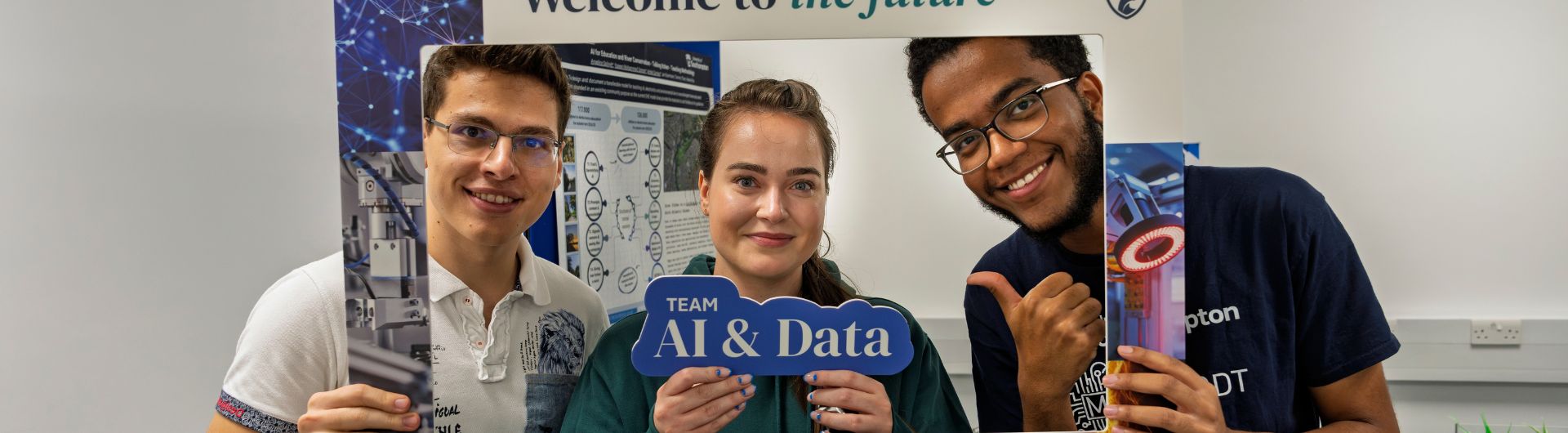
One young visitor at the British Science Festival had been considering a non-STEM subject for their degree. After talking with a robot and learning about the technology behind it, they told MINDS CDT Enterprise Fellow Tommy Tham they were reconsidering studying a STEM subject.
That was one of hundreds of conversations on Saturday 19th September 2026. Around 450 visitors came through our AI demonstration room in the Sir James Matthews Building at the University of Southampton. Five postgraduate researchers from the MINDS and SustAI Centres for Doctoral Training ran four demonstrations with Tommy. Each one let the public try AI for themselves and put their questions to the people building it.
Four ways to meet AI
Rosie and Reachy, the talking robots
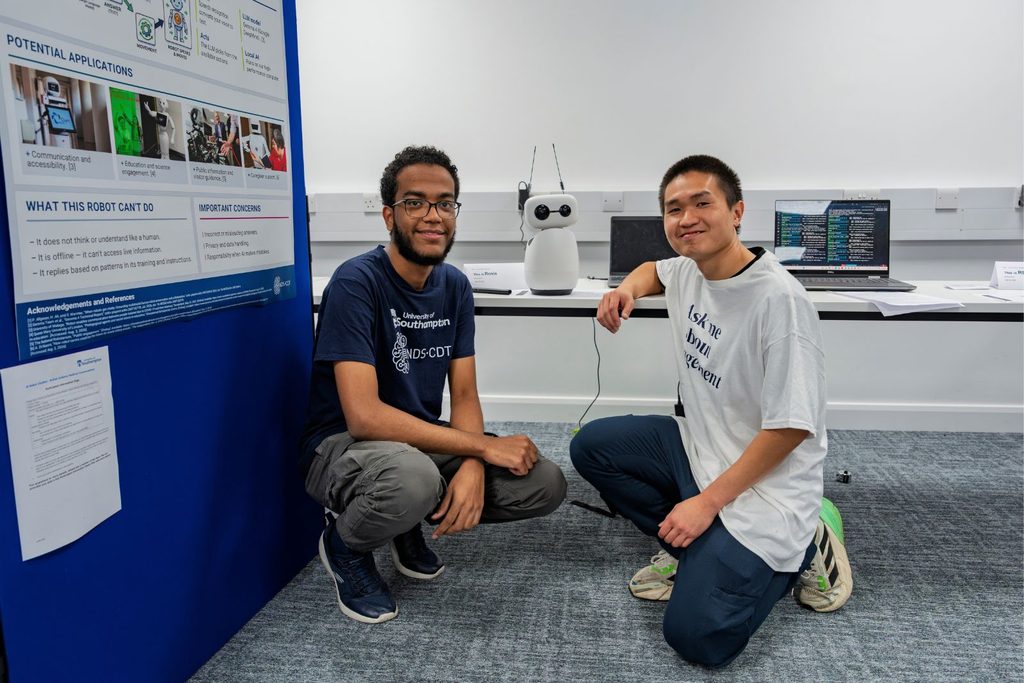
Tommy’s two robots hold spoken conversations on almost any subject a visitor raises. One parent asked about the Victorian era, then asked for the same answer in simpler words for their child. The conversational AI runs on servers hosted at the University, a choice Tommy made with security and sustainability in mind. MINDS postgraduate researcher Yaseen Osman, who also worked on the project, helped run the stand.
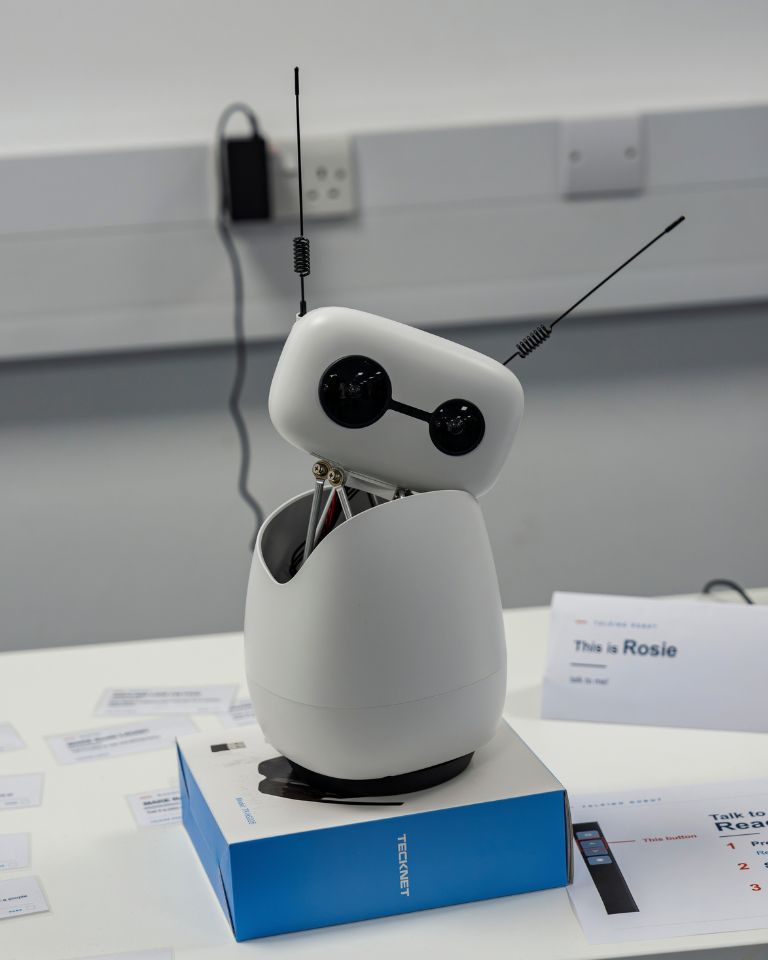
Tommy wanted visitors to leave with a realistic picture: “Hopefully the visitors understand what current AI and robotics technology is capable of, but equally importantly, where its limitations are.”
Connect the Concept
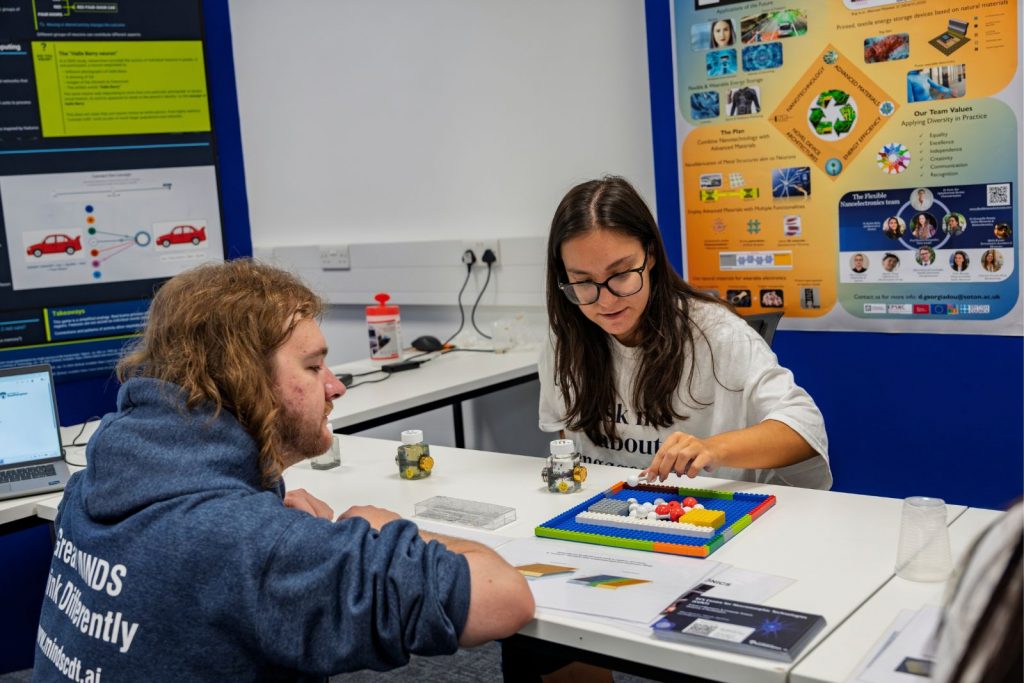
Xander Lowe‘s interactive game lets visitors join model neurons together and watch a signal travel along the connections. It draws on how the brain is thought to build concepts through the connections it forms, an idea that can inform brain-inspired computer hardware. Xander’s PhD is in computational neuroscience, studying how the brain holds information in the short term.
“It was interesting to see how much people underestimated the scale of the brain,” Xander says, “how many neurons and connections there are between them.”
DJ Air
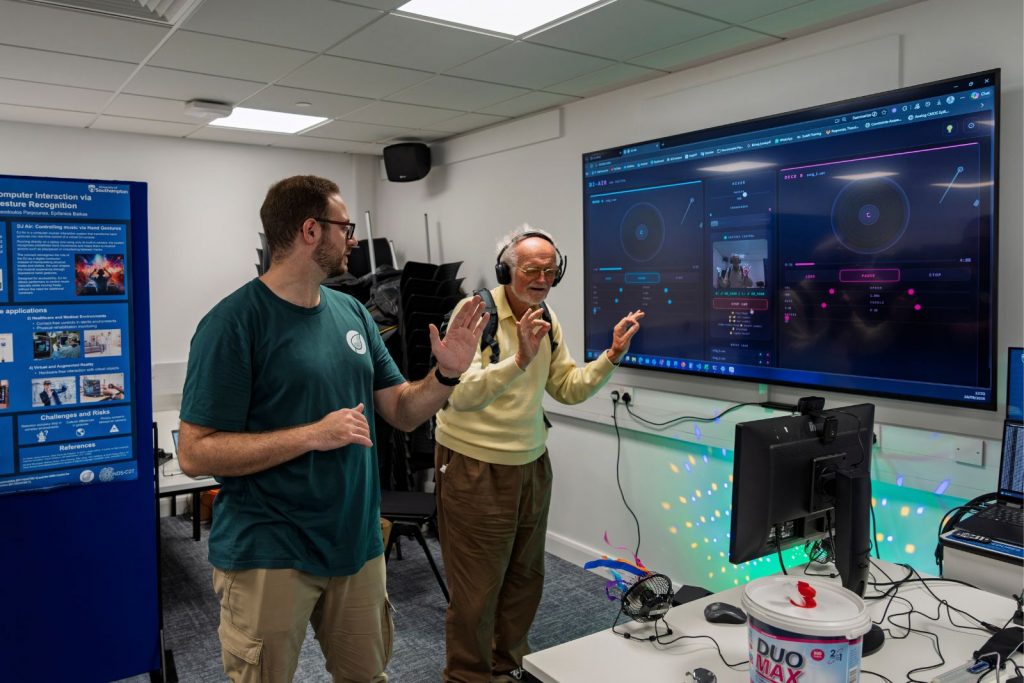
DJ Air lets you mix music and control lighting with hand gestures, picked up by an ordinary laptop camera. MINDS postgraduate researchers Keniel Peart, Rudra Mutalik and Epifanios Baikas built it with SustAI’s Theo Parpounas.
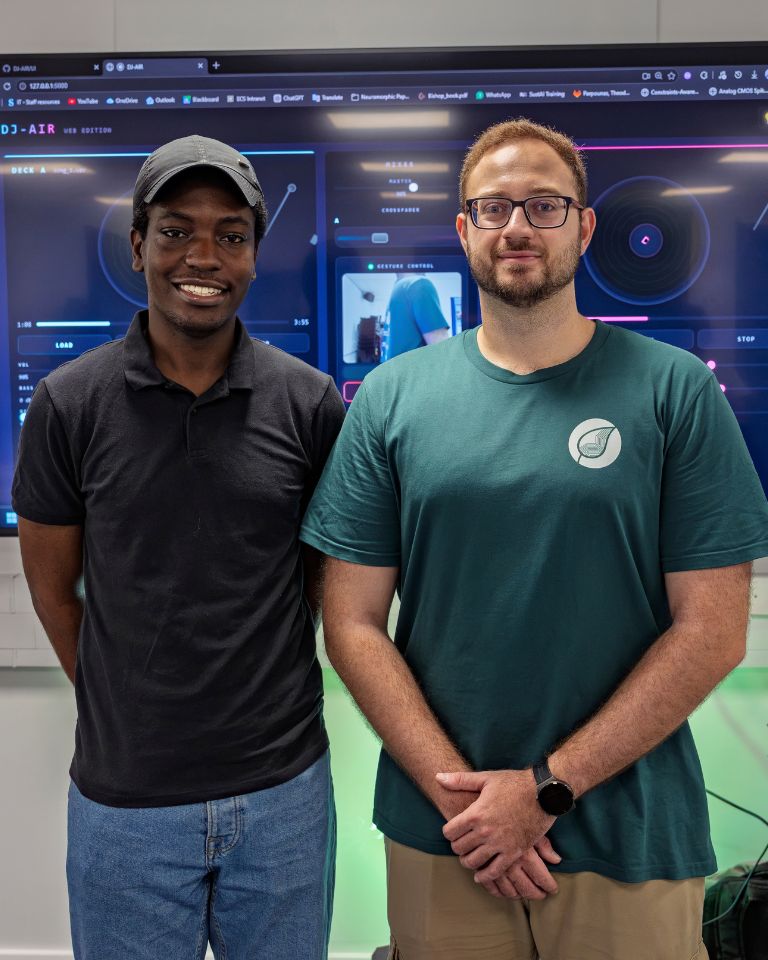
The project won Best Demonstration at the ECS Student Showcase earlier this year. Theo ran the stand on the day, and Keniel came along to watch the public try it. Visitors from young children to seniors queued for a turn.
Talking Itchen
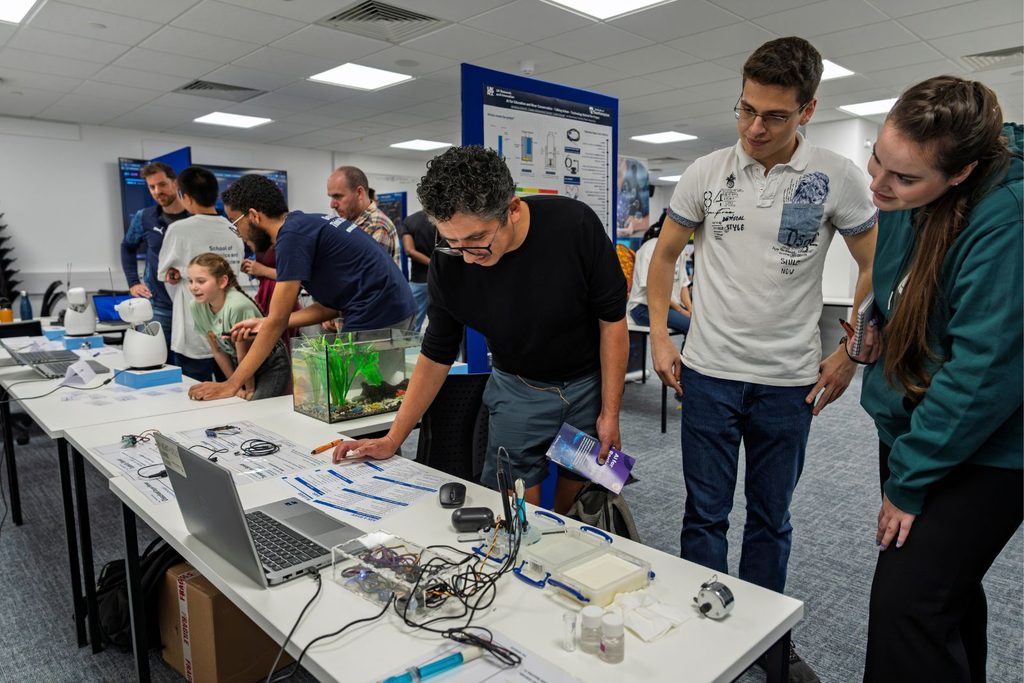
Talking Itchen gives the River Itchen a voice. Sensors measure water quality, including dissolved oxygen, pH and turbidity, and an AI model explains what the readings mean for the health of the river. Yaseen, whose PhD focuses on running large language models efficiently on personal devices, built it with SustAI postgraduate researchers Angelina Spilnyk and Andrei Șontea. His aim was to use AI to “bring character to a river to raise awareness in a unique way.”
Read more from the team on the SustAI website: Angelina Spilnyk on AI, conservation and public engagement and Andrei Șontea on building river sensors.
Why we take our research to the public
Xander used to visit science festivals in Southampton as a child. “I remember coming to science festivals at Southampton when I was younger,” he says. “I think it is important and our responsibility to help foster curiosity in science and technology.”
Read the full story behind each demonstration, in the words of the researchers who built them: Rosie and Reachy, Connect the Concept, DJ Air and Talking Itchen. For the SustAI view of the day, read their British Science Festival story.